
Mail and digital – a combination worth testing

Keeping a focus on tried and tested fundraising channels makes clear sense for nonprofits under pressure to make budgets work ever harder. But it’s also essential to remain vigilant and prepared to cope with evolving market trends by ringfencing at least a small amount of budget for tweaking strategies and exploring new channels and techniques. You never know what might come along to change the effectiveness of something you rely on, from pandemics to platform rule changes, to new regulations and shifting donor behaviours.
A combination well worth testing, if you’re not already, is integrating direct mail and digital. While we’ve been talking about integrated media for years and today’s fundraising campaigns are often multichannel, these two – mail and digital – are often still treated as separate worlds, particularly in cold activity. Together however, they can create a richer, more memorable donor experience that ultimately raises more money for the cause.
Why combining them works
Mail works because, with less in the post these days, it tends to stand out, including with younger audiences, who really do like the novelty factor. It’s visual, tactile, and provides loads of space to tell stories and include relevant enclosures that help build emotional connection. This makes it a really nice way to engage people and bring them into the fold. It’s also very targetable.
Digital also has many benefits, including instant response and its shareability, helping to reach wider audiences, new types of donors, and to prompt hand-raising by providing opportunities to let you know they’re interested in your charity or cause. This could include offering a petition to sign for example, or a pin badge to claim.
Used together, they amplify each other, because people remember what they feel, and act when it’s easy. This makes these channels great for driving activity, whether that’s a one-off donation or signing up to regular giving, and for strengthening emotional connection. Here are some examples:
Combining cold mail with a digital response mechanism, such as a QR code or short URL, makes it easy to share a compelling case for support, maybe linking to a film on location or a celebrity delivering the charity’s message, and for people to then take action. This could be giving a donation, signing up to support regularly, or seeking more information. It also enables them to share to their online networks.
Following up mail recipients digitally, for example with an email saying “We hope you received our letter last week…”, helps to reinforce messaging, and prompt recall and response
A post, story or reel shared on social channels can spark interest that, when the call to action encourages leaving contact details, can provide the starting point for further communication via mail that launches a deeper and more personalised relationship
To give you an idea of just how well they can work together, JICMAIL data (while not charity specific) shows that in Q2 2025, the effectiveness of all mail types (direct mail, door drops and business mail) at driving key digital actions among consumers, reached a five-year high. 9.2% of mail prompted a visit to an advertiser website.
Tracking all-important response
QR codes and short URLS are also very trackable as response mechanisms, and if dynamic, enable changes to be made during campaigns – the destination URL for example. With mail, a unique campaign code can be assigned to each mailing batch, helping to identify what lists or messages are working (cold data lists come with their own unique code), and what you might therefore want to do more of (or less).
For best results, bringing everything together in a CRM system or CDP (customer data platform) is the most effective way of integrating cross-channel campaigns: unifying data into a single view as well as keeping it clean and accurate, and providing the reporting necessary for making sound decisions on future activity.
One message, many touchpoints
But what’s also important when using multiple channels is ensuring the narrative ties them together. A simple example may be, a letter shares a personal story about a beneficiary with a QR code that takes prospective donors or supporters to a short film continuing that story with an opportunity to donate, following which an email thanks them with an update and invites social sharing.
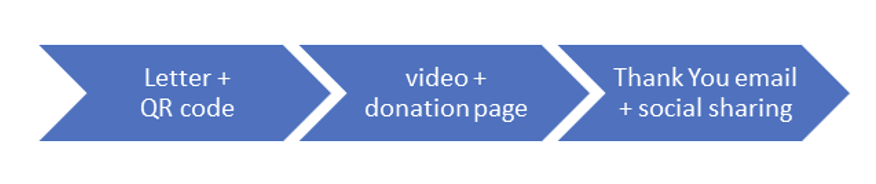
Three blue arrows in a row reading: Letter & QR code; video + donation page; and Thank You email + social sharing
This joined up approach creates emotional continuity, and makes supporters feel part of an unfolding journey, rather than a one-off ask.
There’s no denying it can bring whole new layers of complexity to your fundraising and often requires bringing together several teams to co-ordinate efforts, but a joined-up approach pays off. Here are some more practical tips for successfully integrating these two channels:
Plan ahead to ensure consistent messaging, tone, and imagery across every channel and touchpoint – especially before printing any mail.
Enable digital data capture by ensuring the right technology is in place to collect contact details for follow-up communications.
Know your channel audiences: digital and direct mail can appeal to different age groups. Cold mail lists for example tend to be an older audience – important to bear in mind when deciding messaging.
Tailor donation prompts to the channel, as people tend to give at different levels depending on where they engage.
Test and learn – trial different audiences, messages, donation prompts, and even QR code placement to understand what works best and guide future decisions.
Over to you!
When digital and direct mail work together, people don’t just donate – they connect with the cause, share, and stay engaged. It’s not about choosing one channel over the other; it’s about using both to tell your story in the most effective way, so if your charity isn’t already using the two together, it’s time to test them out. And if you’d like some support, or have any questions, please get in touch!